
How to Learn Tarot Card Meanings Without Memorising
Seventy-eight cards is a lot to memorise and you do not have to. The structure that turns most of the deck into logic, and the habit that does the rest.
 Five of Cups
Cups · Number 5
The Five is grief: real loss, properly felt. The card's specific observation is that two cups are still standing behind the figure, unseen, **because grief narrows the field of vision.** That is a description of how loss works rather than a criticism of anybody experiencing it. The card does not say when he will turn round, and it is careful not to suggest he should have already. That restraint is the point: it describes grief accurately rather than instructing somebody to be finished with it.
Affirmation
“I grieve what is gone without losing what remains.”
The Five is grief: real loss, properly felt.
The card's specific observation is that two cups are still standing behind the figure, unseen, because grief narrows the field of vision. That is a description of how loss works rather than a criticism of anybody experiencing it.
The card does not say when he will turn round, and it is careful not to suggest he should have already. That restraint is the point: it describes grief accurately rather than instructing somebody to be finished with it.
Loss, regret, disappointment. Mourn it. The card does not rush you and neither should a reading of it.
What it adds, quietly and without pressure, is that the situation is not total. At some point turning around is the work, and the card is deliberately silent about when that point arrives.
In an advice position it is one of the few that gives permission rather than instruction: feel it properly and completely, because the versions that are hurried leave something running.
Acceptance beginning. Turning to see what remains, and finding it is more than it looked.
Or grief avoided rather than moved through, which extends it. That is the reading worth watching for, and it usually looks like coping unusually well: back at work immediately, nobody troubled, nothing said.
The tradition treats premature recovery as a form of postponement rather than as strength, and the card reversed frequently arrives some years after the loss it refers to.
Heartbreak, a break-up, or regret over how something ended rather than that it did.
That second reading is the more precise one and the more common. A great deal of the pain in an ending attaches to the manner of it: what was said, what was not, who found out how. The card is describing the spilled cups rather than the fact of loss.
Reversed, healing, forgiveness, or moving on before the grief was finished. The last is worth naming because it is so easily mistaken for progress, and because the tradition holds that grief left partly done tends to attach itself to whatever comes next.
As somebody's feelings, it reads as regret and unresolved sadness directed at what happened. It does not indicate a wish to return, and reading it that way is where this card most often gets misused.
A failure or rejection that stings. A project lost, a role that did not come through, work that came to nothing.
The card's consistent addition is that what survived is more than it feels like: the skills, the relationships, the reputation, the thing learned. That is genuinely true and it is no comfort in the first fortnight, and a reading that leads with it is being unhelpful.
In practice it favours a pause before the next move. Decisions made from the posture in this picture tend to be about escaping the feeling rather than about the work.
Financial loss and the regret attached to it: the investment that went, the money spent on something that failed, the cost of a decision that looked reasonable.
The characteristic error is in the accounting. Focusing on what went rather than on what is left produces worse decisions than the loss itself, and the two upright cups are the card's reminder to total the remainder before acting.
Associated with the sunk cost that keeps being paid because stopping would make the earlier loss real.
Grief as passage, and the refusal of premature consolation. Scorpio does not hurry.
The card sits against every tradition that treats sorrow as something to be transcended quickly. Its position is that the passage is the practice, and that nothing on the far side is reachable by going around.
Associated with lament as a legitimate form, and with the observation that the traditions that make room for grief tend to hold people better than the ones that require serenity.
Grief with physical weight. The body carrying a loss the mind has not finished processing.
Read as reflection rather than diagnosis, the card describes something real and well documented: bereavement and loss have physical effects, from sleep and appetite to a genuinely raised risk in the months afterwards, particularly for older people.
So the honest note is plain. Grief that is not lifting, or that is affecting eating, sleeping or the will to carry on, is a reason to see a doctor, and there is no reading of this card that improves on that. If things feel unmanageable, contact a crisis line or your GP rather than a deck.
For reflection and entertainment. Not medical, legal, or financial advice.
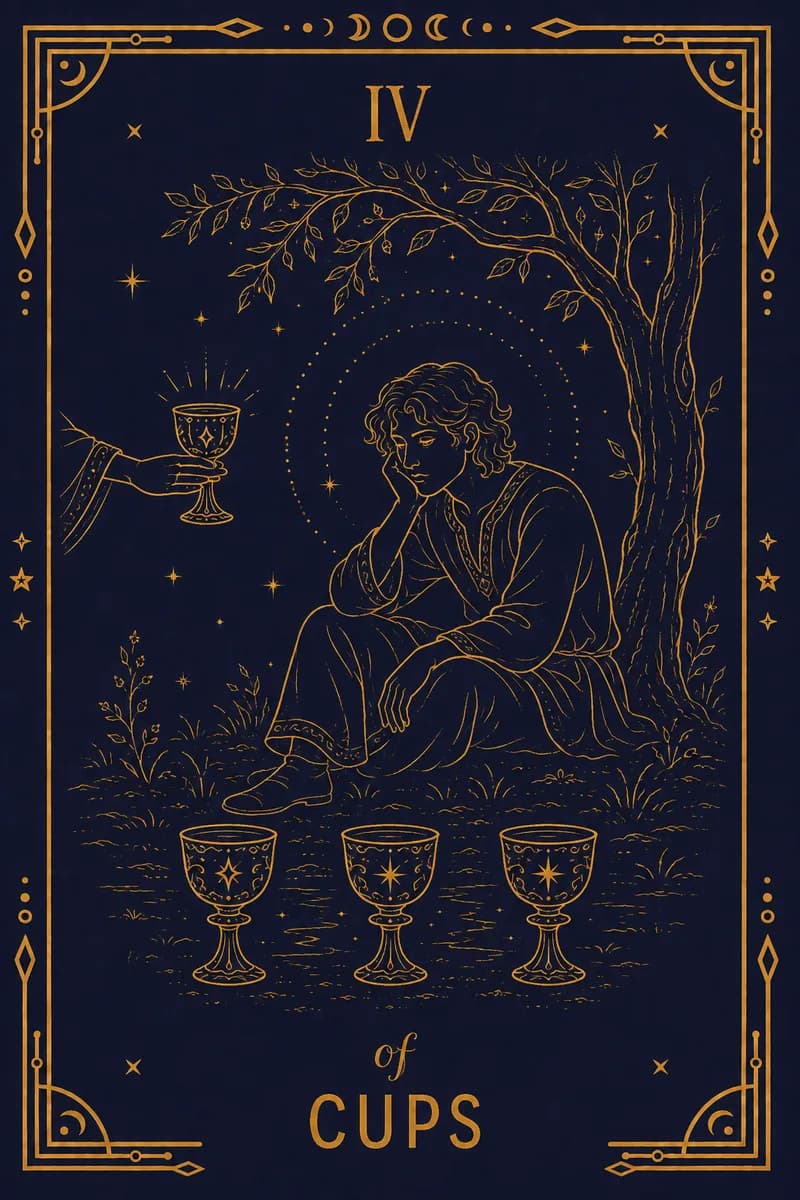
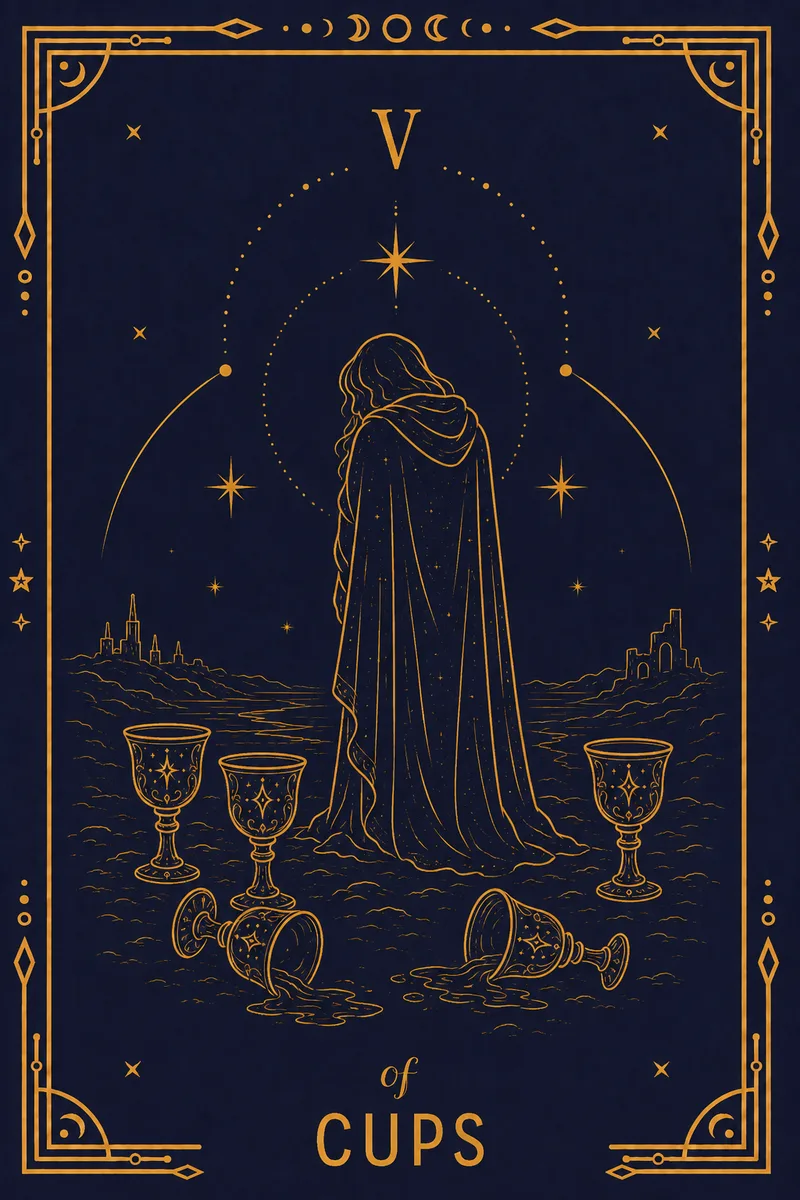
A cloaked figure looks down at three spilled cups; two upright cups stand behind him, and a bridge leads to a castle across the river. Everything needed for the recovery is already in the picture, positioned exactly where he is not looking.
Golden Dawn titled it Loss in Pleasure. The two unspilled cups are Waite and Smith's addition and are the reason the card reads as recoverable rather than final.
Written by Memento Arcana against the Rider-Waite-Smith deck and the Golden Dawn attributions it was built on. No part of it was generated by a language model. Last updated 17 August 2026.
Where traditions disagree about this card, the page says so rather than picking one quietly. How we write these, and our sources.
How Five of Cups has actually shown up for other readers.
Nothing here yet. Be the first to say how this card has landed for you.
Guides to reading this card alongside the other 77.
Seventy-eight cards is a lot to memorise and you do not have to. The structure that turns most of the deck into logic, and the habit that does the rest.
Two cards together mean more than two cards apart. A four-step method: dominant card, elements, the tension between them, then back to your question.
The 22 majors are the themes you do not choose. The 56 minors are daily life. What each half does, and what it means when one dominates a reading.