
What Questions to Ask Tarot (and What Not To)
The question decides the reading. How to turn a vague worry into something the cards can answer, and the four question types that produce useless readings.
One card, drawn now
No question to type, no account, no email. One card from all 78, properly shuffled, with the whole of its meaning rather than a keyword.
 StrengthReversed
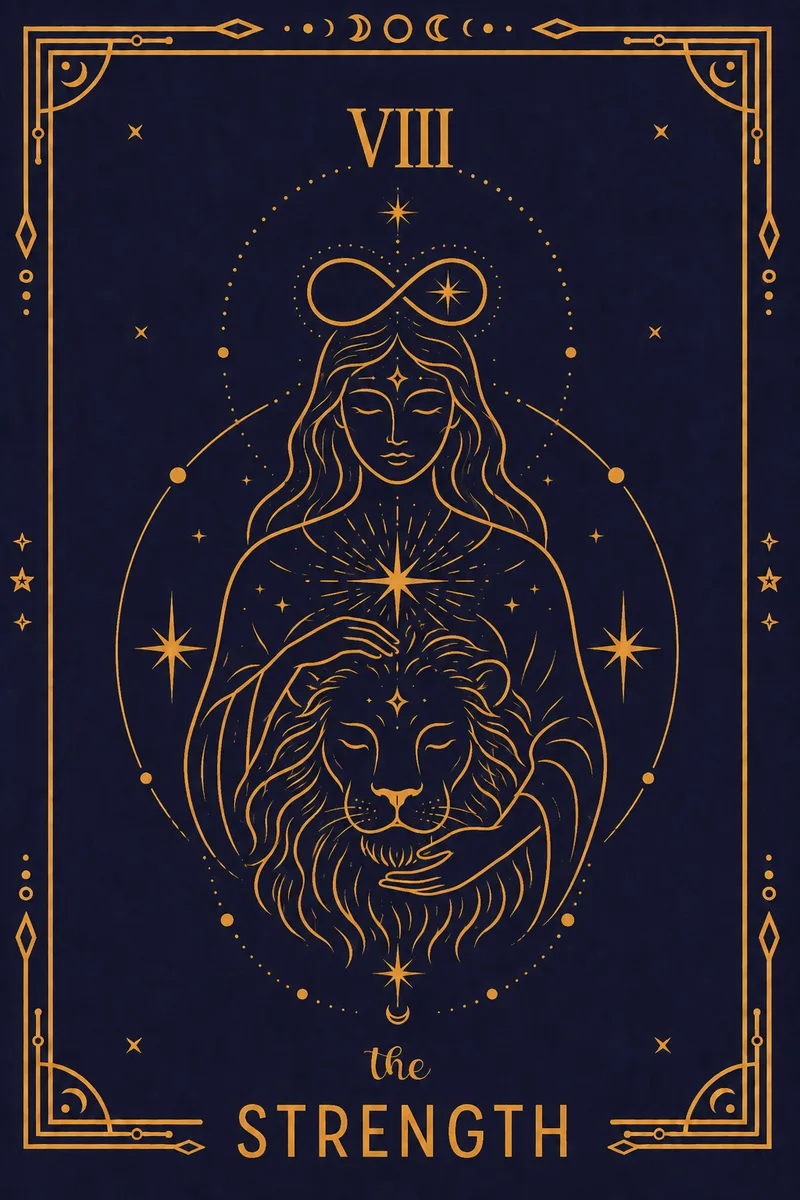
Strength is power that does not need to dominate. The lion is not defeated, it is calmed, and the card insists that this is the harder and more durable form of control. Patience where force would be quicker and worse. The woman wears white and a chain of flowers rather than armour, and closes the jaws with no visible effort. **Every element of the picture is arranged to show that nothing is being overpowered.** The lemniscate above her head is The Magician's, which is the tradition saying plainly that this is the same infinite power turned inward instead of outward. It is also the card of being more equal to something than you believe. That reading is old, consistent, and one of the few genuinely encouraging things the deck says without qualification.
Self-doubt, or raw force where restraint was needed. It can show the lion running the house: an impulse, addiction or anger that has stopped being managed. Sometimes it is simply exhaustion, compassion spent down to nothing. That last reading deserves more room than it usually gets. Strength reversed frequently describes somebody who has been gentle and patient for a very long time and has nothing left, which is not a character failure and does not respond to being told to try harder. The card reversed is often a request for relief rather than for resolve. Where the surrounding cards are harsher, the reading is **an appetite that has stopped being negotiated with.** The tradition treats that seriously and without contempt, which is the correct register for it.
Every card has the same chance of coming up, and the reversal is decided separately. Nothing is weighted toward the pleasant cards, which some sites do quietly. You are as likely to get the Ten of Swords as the Sun.
A card pulled with no question attached is a prompt rather than an answer. If you want it to mean something, give it something to be about first: a single card reading lets you state the question, and the meaning that surfaces changes with it.
Drawing one card a day is the fastest way to learn the deck. Here is the version that survives a normal week.
For reflection and entertainment. Not medical, legal, or financial advice.
One card is the reading experienced readers use most. These cover doing it well.
The question decides the reading. How to turn a vague worry into something the cards can answer, and the four question types that produce useless readings.
A reversed card is not a curse. Four ways to read reversals (blocked, internal, out of balance, or emphasis) and why sticking to one system matters.
Yes, but it is the easiest form of tarot to do badly. The four traps of reading for yourself, and the habits that keep a self-reading honest.