
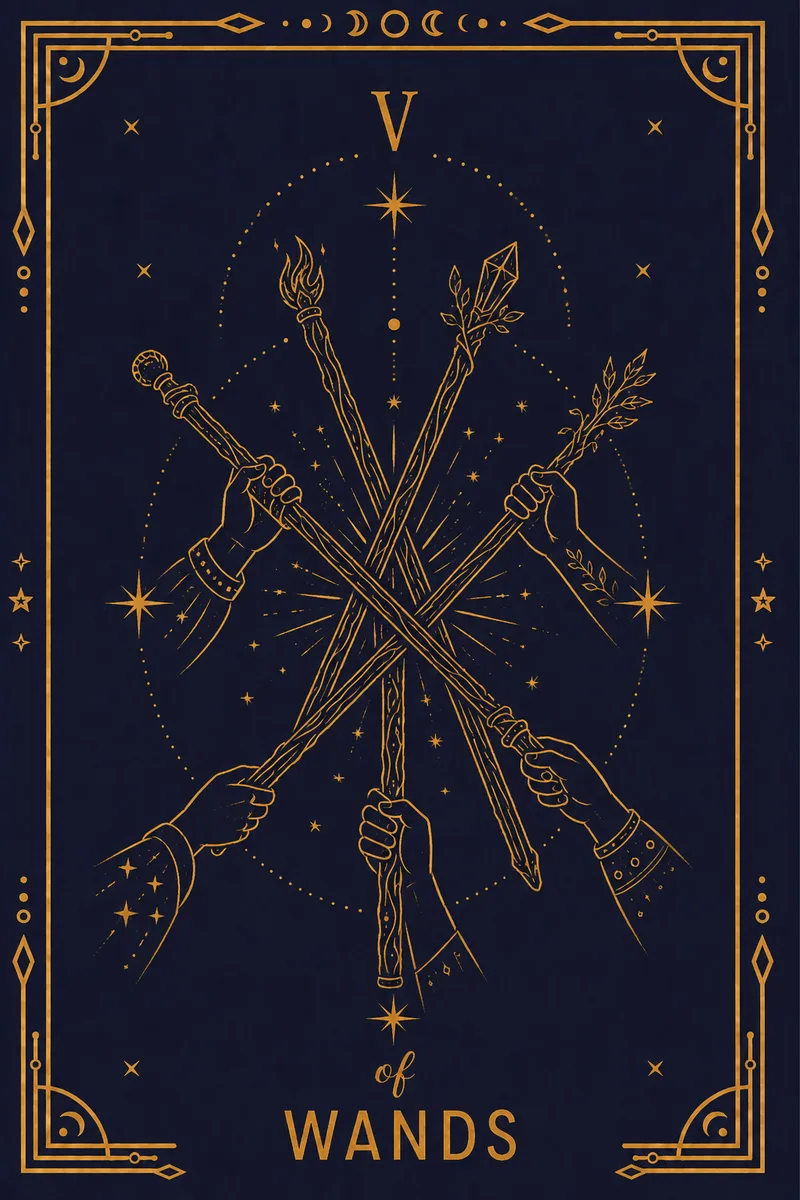
 Five of Wands
Five of Wands · Yes or No
Is Five of Wands a yes or a no?
Five of Wands in a yes/no reading, plus why the answer is less binary than the question wants it to be.
No
This card leans no. It carries obstruction, ending or delay, and in a straight yes/no draw most readers take it negatively.
The Five is friction: competing energies, none of them evil, none of them coordinated.
It is conflict without a villain, which makes it more exhausting and more solvable than it feels.
The practical question it raises is whether anybody has actually said what is being contested. Most Five of Wands situations run on unstated assumptions about whose decision something is, and they continue until somebody names it out loud.
Why the answer is not really binary
Yes/no readings are the most popular use of tarot and the one it is worst suited to. A seventy-eight card deck built to describe nuance is being asked for one bit of information, and most of what it knows is discarded in the process.
A more useful version of the same draw: read Five of Wands as what shape this takes, not whether it happens. Competition, disagreement, everybody talking over each other.
Not a fight to the death: a scramble. That distinction changes what to do about it, because a scramble is a coordination problem rather than a moral one.
It is often productive if somebody imposes structure on it, which is the card's most useful practical note. Five people with different ideas is a resource until nobody chairs the meeting.
Reversed
Reversed, the lean weakens or inverts. Conflict avoided rather than resolved, or genuinely ended.
The avoidance version is the more common and produces a quiet that everybody mistakes for agreement, until the same argument arrives attached to something trivial.
It can also mean inner conflict: competing impulses fighting internally instead of out loud, which is the same scrimmage with one participant and no possibility of a chair.
Draw it for yourself
Reading about a card is not the same as drawing one. A single-card reading takes about a minute and answers your question rather than a general one.