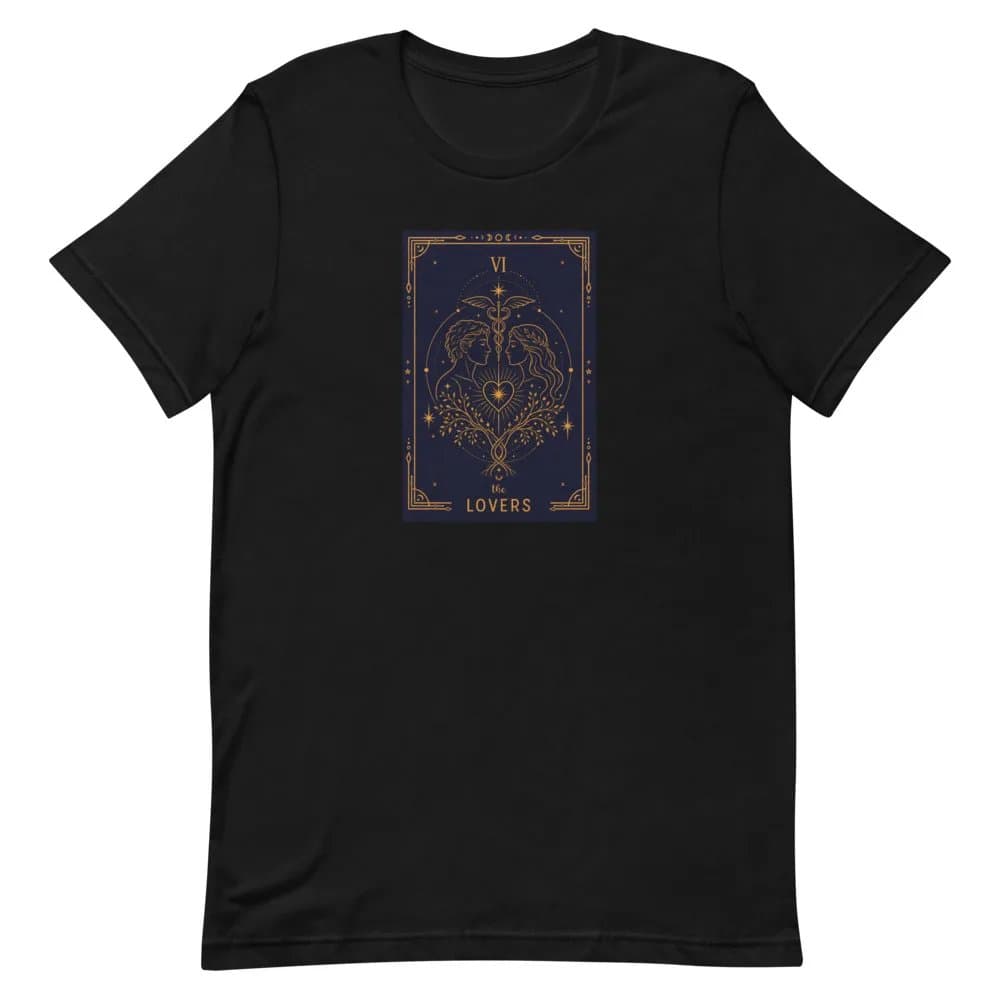
The Lovers - Unisex Tee
From £17.95
View item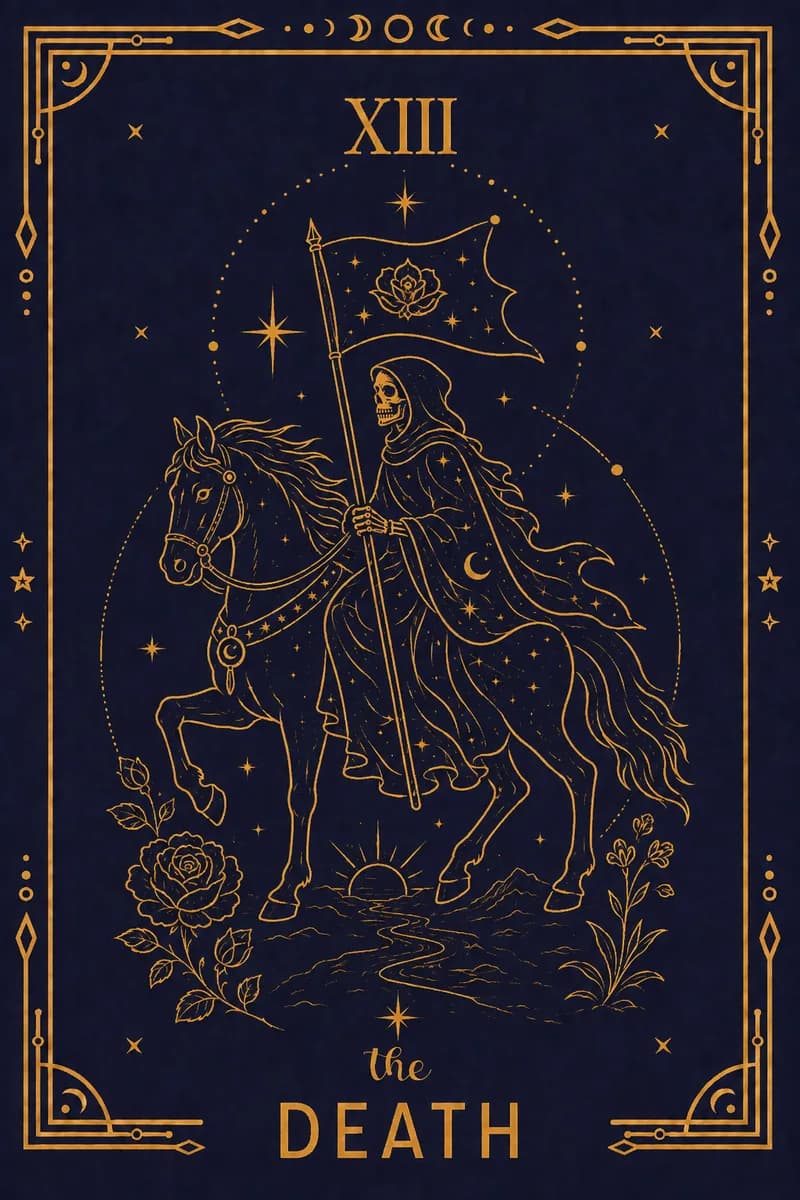 Death
DeathMajor Arcana · XIII
Death is ending as transformation. It is the most feared card in the deck and one of the most consistently constructive: something concludes so that something else can exist. This needs saying first and plainly, because it is why most people are reading the page: **it very rarely refers to physical death, and no responsible reader treats it as a prediction of one.** A deck cannot know that and does not claim to. Anybody who tells you otherwise is doing something other than reading tarot. The picture is a triumphal procession rather than a slaughter. A king lies dead, a bishop pleads, a child kneels unafraid, and the sun is rising between two towers behind all of it. Rank does not exempt anybody, and the sunrise is the card's actual argument.
Affirmation
“I let what has ended be over.”
Death is ending as transformation. It is the most feared card in the deck and one of the most consistently constructive: something concludes so that something else can exist.
This needs saying first and plainly, because it is why most people are reading the page: it very rarely refers to physical death, and no responsible reader treats it as a prediction of one. A deck cannot know that and does not claim to. Anybody who tells you otherwise is doing something other than reading tarot.
The picture is a triumphal procession rather than a slaughter. A king lies dead, a bishop pleads, a child kneels unafraid, and the sun is rising between two towers behind all of it. Rank does not exempt anybody, and the sunrise is the card's actual argument.
A definitive ending. A chapter closes and will not reopen. Resisting it costs more than accepting it.
The important nuance is about timing: what is being cleared away was already over. The card is the acknowledgement rather than the cause, and it typically arrives some time after the thing itself finished, for somebody who has been maintaining it.
In an advice position it asks for a clean line rather than a gradual withdrawal, on the grounds that the drawn-out version costs both people more. That is demanding advice and the card does not soften it.
Clinging to what has finished. A transition stalled by refusal. It can indicate fear of change so strong it has become the problem, or a slow, dragged-out ending that a clean cut would have ended kindly.
The reversal is where the real difficulty of this card sits. Upright it is over; reversed it is over and is being carried, which takes continuous effort that is invisible to everybody including the person doing it.
Also read for an ending happening at somebody else's pace, which is a genuinely hard position and not a failure of nerve. The card does not always describe a choice.
A relationship ending, or transforming so completely that the old version of it is gone. The second is at least as common as the first and gets overlooked because the card's name is louder than its meaning.
Sometimes it is the death of a dynamic rather than of the bond: the way two people have been doing this stops working, and what follows is the same couple on entirely different terms. Long relationships tend to contain several of these.
Reversed, staying long past the point either person believes in it. The tradition is unusually gentle about why, which is almost always fear rather than dishonesty, and unusually firm that the maintenance costs more than the ending would.
As somebody's feelings, it reads as something concluded. That is a hard answer to receive and it is what the card says; a reader who converts it into hope is not doing you a service. It says nothing about what either of you does next.
A role, industry or identity ending. Redundancy, resignation, the close of a business, a profession changing under you. Genuinely liberating in retrospect, and rarely in the moment.
The identity part is the one people underestimate. Work supplies a great deal of who somebody is, and this card frequently describes losing that rather than losing an income. The two need separating before anything useful can be decided.
The practical reading is that the thing is over whether or not it has been announced, and the useful question is what comes next rather than how to preserve it. Where a role has already changed shape around somebody, this card is often just naming it.
A financial chapter closing: a debt cleared, an income stream ending, a possession released, an arrangement wound up.
It covers both the relief and the loss, and the tradition treats a final payment and a lost client as the same motion. What it consistently favours is completion over extension: closing the account rather than restructuring it again.
Reversed, holding onto an asset or arrangement well past its usefulness, usually because selling would make a loss real. That is a recognised and expensive pattern, and the card is pointing straight at it.
Ego death, initiation, and the mystery at the centre of a great many traditions. Scorpio's domain: what must be destroyed in order to be remade.
The card is associated with the deliberate versions of this, from initiatory rites to contemplative practices that dismantle a settled self-image, and with the involuntary ones that arrive through loss and do the same work less kindly.
Its claim is old and consistent across otherwise unrelated traditions: nothing is added to a self that is already full. The clearing is the practice.
A major change in condition, often a decisive turn. Scorpio rules elimination and the reproductive system in the traditional correspondence.
Read as reflection rather than diagnosis, and here more carefully than anywhere else on the site. The card is about endings in the broad sense, and its appearance in a health question says nothing whatsoever about anybody's prognosis. It cannot, and a reader implying otherwise would be doing real harm.
What it is useful for is the question of what is being carried that could be put down: a habit, a workload, a way of living that has already stopped fitting. Anything physical belongs with a doctor, and a frightening draw is a reason to make an appointment rather than to sit with the card.
For reflection and entertainment. Not medical, legal, or financial advice.
A skeleton in black armour rides a white horse, carrying a banner of the white mystic rose: the imagery of a triumphal procession, not a slaughter. A king lies dead, a bishop pleads, a child kneels unafraid: rank does not exempt anyone. The sun rises between two towers in the background, which is the card's actual argument.
Frequently left unnamed in Marseille decks: printers simply omitted the title from card XIII out of superstition, a practice that persisted for centuries. Waite's heavily symbolic redesign, borrowing from the Book of Revelation's pale rider, was an explicit attempt to shift the card from mortality toward transformation.
Written by Memento Arcana against the Rider-Waite-Smith deck and the Golden Dawn attributions it was built on. No part of it was generated by a language model. Last updated 17 August 2026.
Where traditions disagree about this card, the page says so rather than picking one quietly. How we write these, and our sources.
How Death has actually shown up for other readers.
Nothing here yet. Be the first to say how this card has landed for you.
Browse Our Store
Tarot decks, journals, prints and apparel, shipped worldwide.
Guides to reading this card alongside the other 77.
Seventy-eight cards is a lot to memorise and you do not have to. The structure that turns most of the deck into logic, and the habit that does the rest.
Two cards together mean more than two cards apart. A four-step method: dominant card, elements, the tension between them, then back to your question.
The 22 majors are the themes you do not choose. The 56 minors are daily life. What each half does, and what it means when one dominates a reading.